

Tartus – 18 June 2026
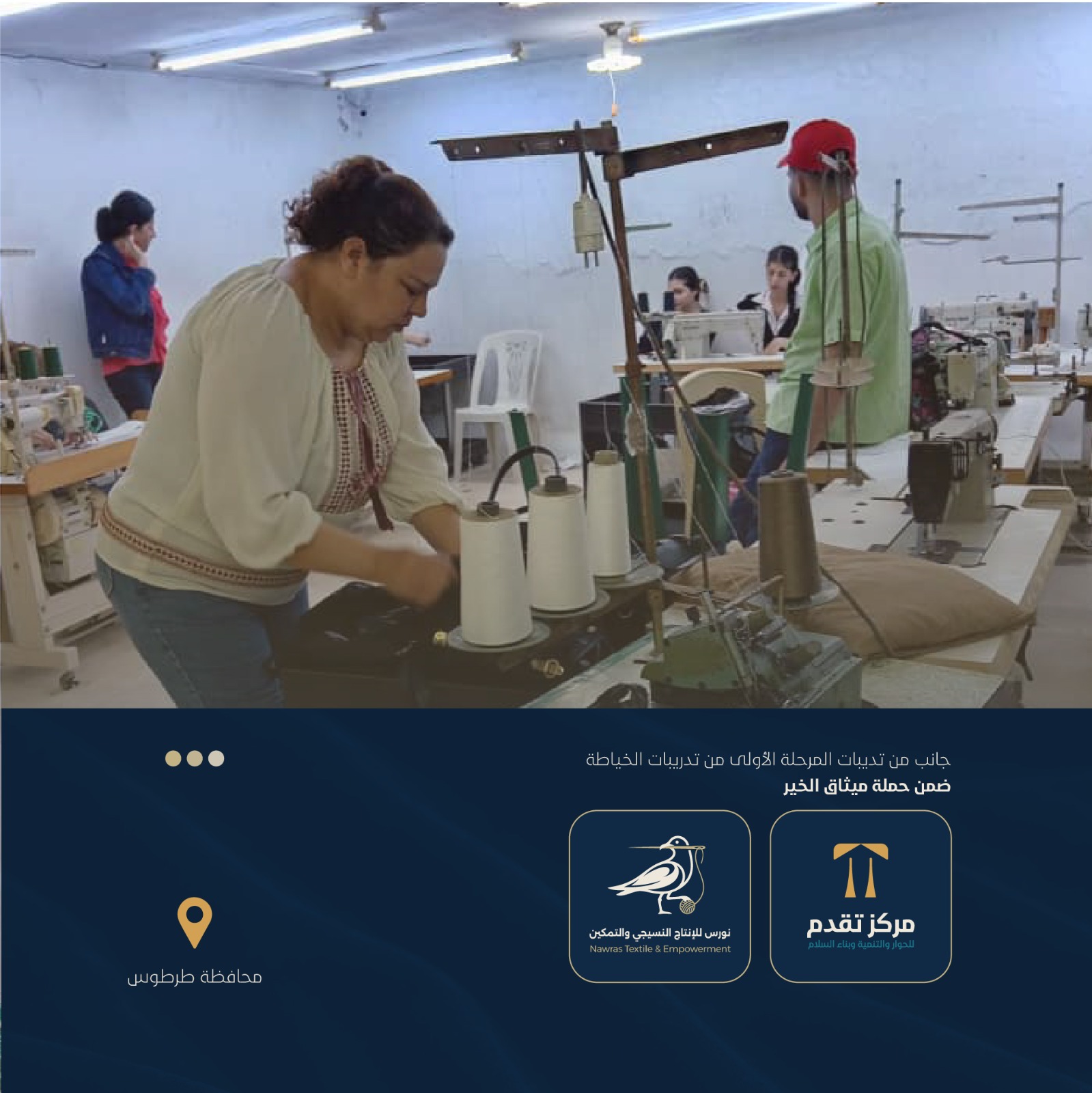
The Taqaddum Center for Dialogue, Development, and Peacebuilding successfully concluded the second week of practical training under the “Nawras Textile Production and Economic Empowerment Project” in Tartus Governorate, marking a significant transition for the 25 trainees from the foundational learning stage to actual production.
The first week followed a gradual learning journey that began with overcoming fear of using the sewing machine and learning essential skills such as threading the machine and winding the bobbin. Participants then practiced, without thread, on straight and curved lines drawn on paper to develop control over speed, precision, and machine guidance.
At the beginning of the second week, trainees advanced to practical work on fabric. They successfully mastered basic stitching techniques and edge finishing before progressing to the design and production of their first complete products—pillow covers. The trainees achieved encouraging results, with evaluations ranging from good to very good.
As part of the program’s commitment to encouraging excellence, the project management and trainer recognized six outstanding participants who demonstrated exceptional skill and dedication: Zulaikha, Dalal, Ruba Al-Hajj, Ruba Sudan, Suha, and Faiza.
The Nawras Project represents one of Taqaddum Center’s strategic initiatives aimed at linking economic empowerment with community stability and peacebuilding. The project serves as a sustainable extension of the “Charter of Goodness” Campaign, helping beneficiaries move beyond direct humanitarian assistance toward self-reliance, productivity, and long-term economic resilience.
The initiative is being implemented in coordination with the Local Development Office in Tartus Governorate, which contributed to the participant selection process to ensure broad geographical representation from Tartus, Banyas, Al-Qadmous, and surrounding rural areas. The project also benefits from a fully equipped textile workshop featuring modern machinery and equipment, providing participants with the tools necessary to achieve sustainable production and compete effectively in the local market.