
Syria Beyond Assad: The State Question Remains

Ismail Haj Bakri

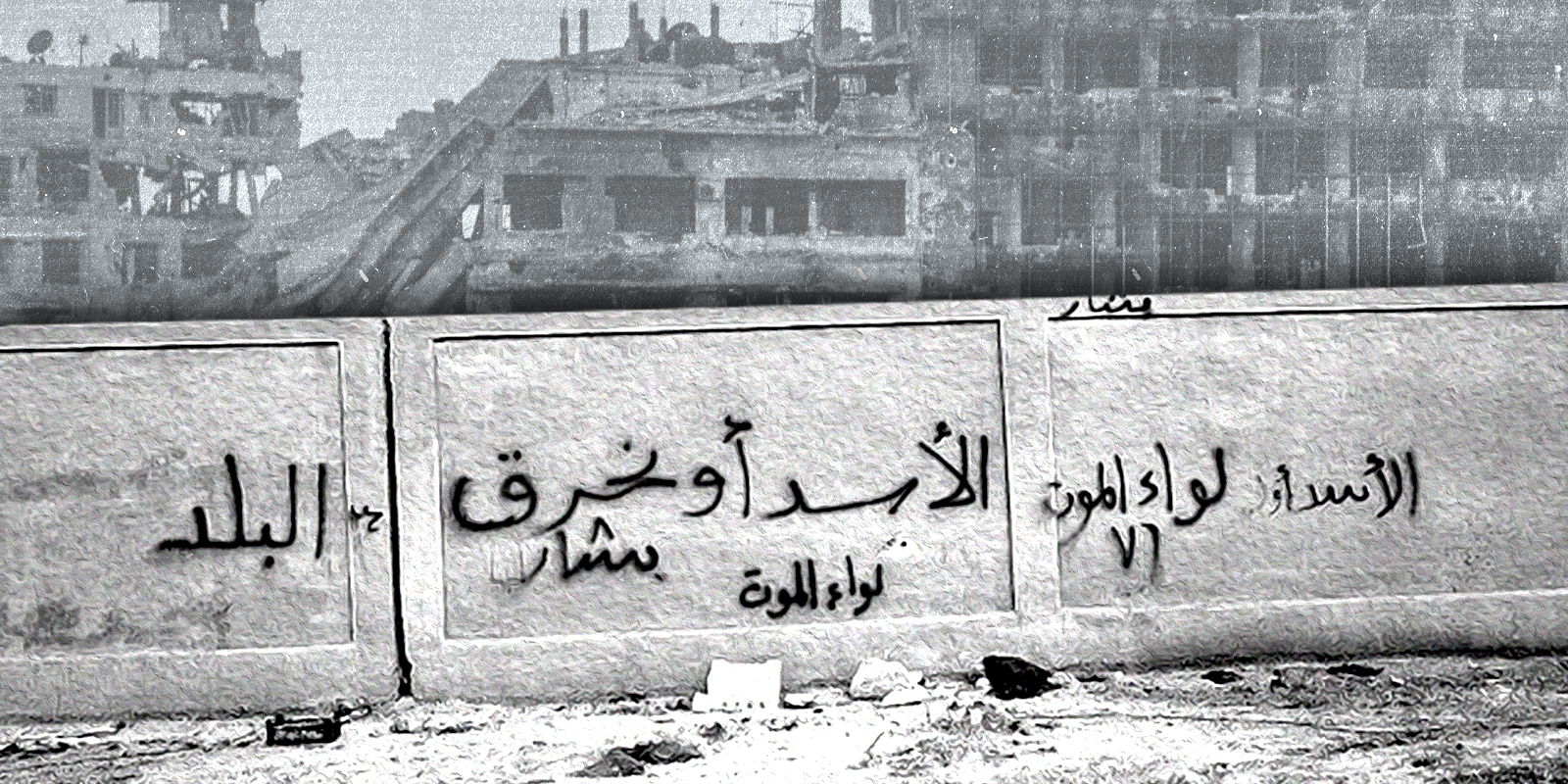
The slogan “Assad or We Burn the Country” was not merely a phrase that emerged during a moment of political violence. Rather, it was the most concise expression of a governing logic that had taken shape over decades—a logic that tied the survival of the state to the survival of the regime, stability to loyalty, and politics to fear. Within this framework, Syria was not governed as a public sphere for equal citizens, but as a space of continuous control, constantly reshaped whenever the interests of those in power required it.

Since the Ba’ath Party came to power in 1963, the question of the state in Syria was never presented as a national project, but rather as an instrument of control. Society was not viewed as a partner in producing legitimacy, but as a silent and homogeneous community whose loyalty was directed toward the leader and the ruling party. Citizenship was stripped of its substantive meaning and redefined as a privilege granted by the authorities. Within this equation, the state was built not on trust but on fear, producing not citizens but cautious individuals who understood the limits imposed upon them. Over time, influence and privileges were distributed according to proximity to power and informal affiliation with its networks.

When the Syrian uprising began in 2011, it did not create division within Syrian society; it revealed it. What surfaced was not a consequence of the revolution itself, but the result of years of political and social repression. As the authority of the central state weakened, the vacuum concealed by decades of security control became visible. In the absence of inclusive institutions, many Syrians turned to religious, regional, and tribal identities—not as alternative political projects, but as mechanisms of protection in the face of uncertainty. The problem was not the emergence of these identities in itself, but the absence of a comprehensive political project capable of managing them. Amid the limited role of cultural and intellectual elites, these affiliations became instruments that were exploited by local and regional actors, deepening Syria’s social and political fractures.

One of the most significant realities exposed by the Syrian conflict was the myth of the “homogeneous society” that the regime had promoted for decades. Such a society never truly existed; it was imposed through coercion. Once that coercive power weakened, the façade quickly collapsed. What remained was a diverse society lacking a social contract and institutions capable of managing difference. A state that relies on security control rather than legitimacy may postpone an explosion, but it cannot prevent it. When such a state falters, the resulting vacuum allows competing identities to struggle over what remains of authority.

The social contract in Syria was never built as an agreement between society and the state. Instead, it was imposed from above and was therefore inherently fragile. The relationship between ruler and ruled was not defined through mutual rights and responsibilities, but through obedience in exchange for protection. When this equation collapsed, society found itself without a unifying reference point. In this context, civil peace was often presented as a simple solution. Yet genuine social peace cannot be achieved through top-down decisions or symbolic committees. It is a long political and social process that begins with mutual recognition of suffering and requires a comprehensive national dialogue that includes all Syrian communities, especially those that experienced the greatest marginalization and harm throughout the conflict.


No discussion about rebuilding the state can be meaningful without genuine transitional justice. Justice is not merely a moral demand; it is a political prerequisite for stability. Any settlement that bypasses truth-telling, accountability, and equality before the law will remain fragile, resting on temporary balances of power rather than public trust. A strong state is not measured by its ability to control territory, but by its ability to foster a society that identifies with and belongs to the state. When citizens feel that the state represents and protects them on the basis of equal citizenship, the need to seek refuge in narrow identities diminishes. When justice is absent, however, these identities re-emerge as necessary alternatives.

Failure to Manage Diversity

Syria’s crisis does not stem from its social and cultural diversity, but from the state’s failure to manage that diversity within a fair social contract. Diversity, when governed through inclusive institutions and sound policies, becomes a source of strength. When suppressed or politically manipulated, it becomes a source of vulnerability.

The experiences of Lebanon, Iraq, and Libya offer important lessons in this regard, as they reflect repeated failures in post-conflict state-building and peacebuilding. Following its civil war, Lebanon adopted a sectarian power-sharing system that transformed divisions into a permanent basis of governance. Rather than ending conflict, it institutionalized it. Iraq, meanwhile, fell into the trap of sectarian polarization after 2003, while Libya’s lack of effective institutions following the fall of its regime pushed the country into a prolonged cycle of violence and fragmentation.

These examples demonstrate that the failure of post-conflict state-building is not caused by diversity itself, but by the inability to manage diversity within a unifying national framework. When citizenship is replaced by sectarian or factional quotas, the nation becomes a collection of competing interests. As justice disappears, the door is opened to instability and disorder.

From Debate to Policy

In recent years, discussions have emerged across various Syrian circles, including seminars and dialogue sessions organized by the Taqaddum Center for Dialogue, Development, and Peacebuilding, focusing on moving beyond diagnosing the crisis toward proposing practical pathways for rebuilding the Syrian state. These discussions highlighted several essential measures, including:

  • Criminalizing sectarian hate speech through clear legislation and cooperation between society and state institutions, as sectarian rhetoric has long been used to reinforce sub-national loyalties and weaken national belonging.
  • Restricting arms to the authority of the state, as the proliferation of weapons fuels divisions and strengthens tribal and regional loyalties at the expense of national institutions.
  • Improving economic conditions and creating employment opportunities, since economic hardship deepens social divisions and drives young people toward narrow forms of affiliation and dependency.
  • Implementing transitional justice through truth-telling and accountability, not as a tool of revenge, but as a foundation for a new social contract built on trust and equality.
  • Empowering professional associations and civil society organizations, enabling citizens to express their interests and participate actively in rebuilding public life.
  • Applying decentralization and strengthening Local Administration Law No. 107, allowing local communities greater participation in managing their own affairs and contributing to state-building.
  • Promoting national identity through education and culture, as both are essential for fostering a shared sense of belonging that transcends sectarian and regional divisions.
  • Rebuilding trust between citizens and the state on the basis of justice and equality, since trust is created not through slogans but through institutions that respect and protect the rights of all citizens.
  • Ensuring equal opportunities and rejecting ethnic and sectarian discrimination, because equality before the law and equal access to opportunities are fundamental to integrating society and managing diversity fairly.

Building a strong and just Syrian state cannot be achieved through coercion or unilateral decisions. It requires a genuine national partnership that respects diversity and embraces inclusion. Any attempt to impose a single vision from above is destined to fail, as it reproduces division and fuels further conflict.

The success of Syria’s current authorities will depend on their ability to navigate the country’s complex realities with wisdom and responsibility, and on their commitment to implementing the outcomes of a comprehensive national dialogue capable of laying the foundations for a stable, inclusive, and democratic state.

takkadum
takkadum
Articles: 42

Leave a Reply

Your email address will not be published. Required fields are marked *