
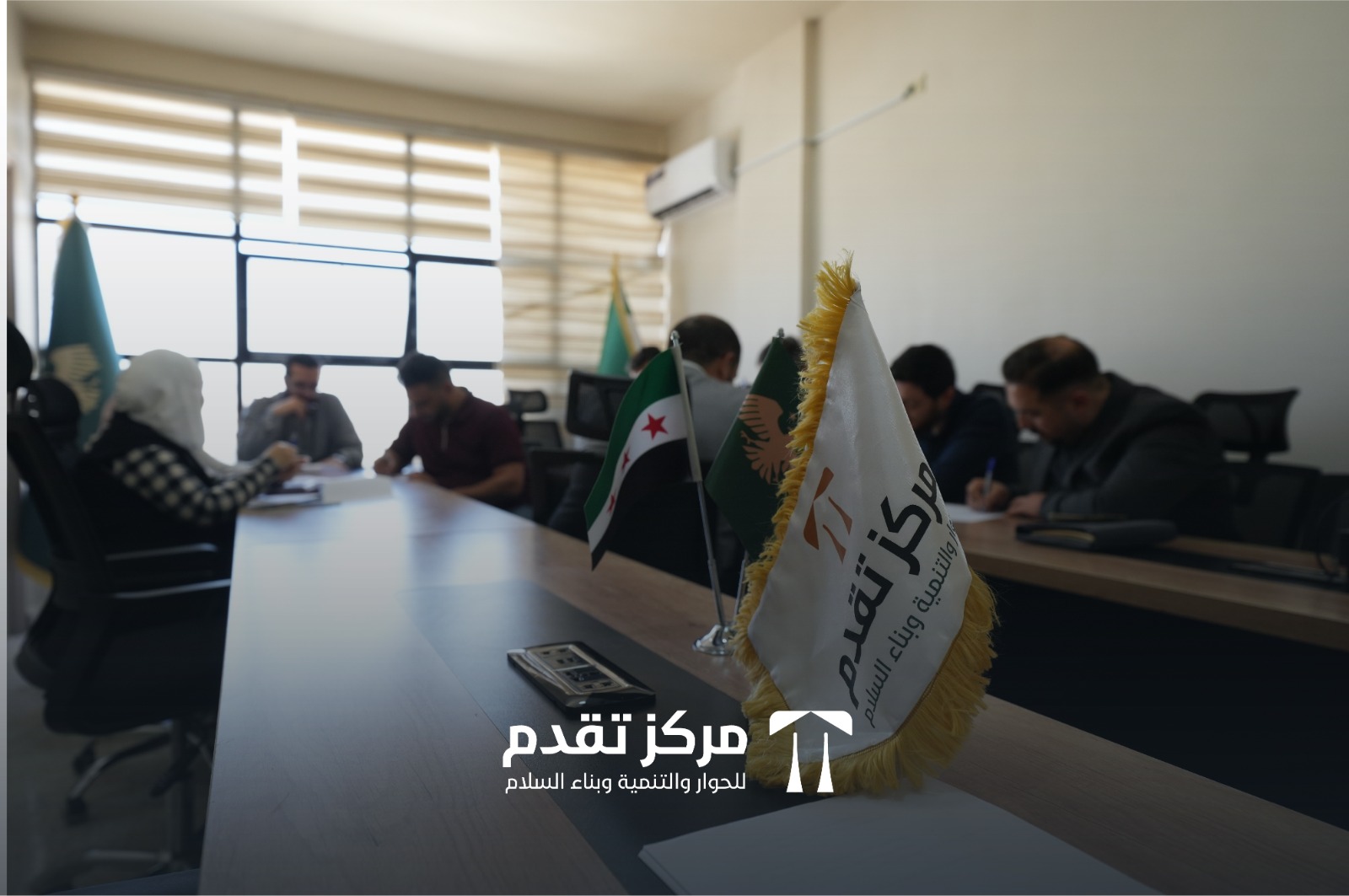

Taqaddum Conducts a Diagnostic Workshop for the Homs Directorate of Information to Enhance Institutional Performance
In a step aimed at moving beyond conventional training approaches toward tangible structural change, the Taqaddum Center for Dialogue, Development, and Peacebuilding conducted a specialized workshop on Sunday targeting the leadership staff of the Homs Directorate of Information. The workshop focused on “Training Governance and the Diagnosis of Administrative and Technical Needs”, with the goal of ensuring a measurable impact reflected in improved media and institutional performance.
Diagnosis Rather Than Training
The workshop was opened by Dr. Abdullah Al-Ajmi, an expert in administration and law and a researcher in governance issues, who presented a critical perspective on prevailing training practices. He emphasized that training is neither a luxury nor an isolated activity, but rather a tool for solving clearly identified problems.
Dr. Al-Ajmi explained that the limited impact of many previous training programs stemmed from the absence of accurate diagnosis. He stressed the importance of distinguishing between gaps that can be addressed through training and those resulting from shortages in resources or deficiencies in policies and administrative systems.
Focused Discussion Session: Identifying the Real Challenges
The first session of the workshop, attended by the Director of the Directorate of Information and ten department heads, featured an open and transparent discussion on operational challenges. Excessive centralization, time pressures, and planning gaps emerged as the most significant obstacles.
In an important intervention concerning time management, the Production Director noted that delays in completing tasks are sometimes caused by shortages in human resources and equipment. In response, Dr. Al-Ajmi emphasized that “resource shortages cannot be solved through training,” but rather through submitting well-documented needs assessment reports to the relevant authorities.
Meanwhile, the Director General pointed out that the pressures associated with governmental media requirements and rapid response demands often reduce the team’s ability to adhere to operational plans. The Planning Department further indicated that only 20 percent of planned activities are actually implemented due to these constraints.
Real-World Case Analysis: From Theory to Practice
During the second session, participants engaged in practical diagnostic exercises by analyzing two real media cases:
A National Event (Short-Term Project)
Participants examined the consequences of lacking a clear vision and relying on unrealistic timelines, which ultimately resulted in weak follow-up and evaluation processes.
Media Week Project
The diagnostic process revealed leadership and organizational gaps, as well as poor task distribution, all of which negatively affected the quality of production and coordination.
The working groups concluded that correspondents require additional technical training, while managers need training in effective delegation skills to address organizational shortcomings.
Needs Assessment Matrix: A Roadmap for the Future
The workshop concluded with a session dedicated to training department heads on developing a Needs Assessment Matrix. This matrix includes a description of each challenge, classification of the gap (training, leadership, or planning-related), and identification of the appropriate intervention, whether technical support, organizational restructuring, or skills-based training.
The matrix will be transformed into an official planning document that defines operational objectives for each department based on the “Golden Triangle” of Knowledge, Attitude, and Skills, while establishing clear Key Performance Indicators (KPIs) to ensure sustainability and measurable progress.
Positive Evaluation
At the conclusion of the three-hour workshop, participants expressed their appreciation for this qualitative and practical methodology.
The Coordinator and Administrative Director of the Taqaddum Center emphasized that the initiative reflects the Center’s commitment to providing root-cause solutions that address actual workplace needs. He stated:
“We did not come simply to deliver a training session and leave. We came to build a diagnostic mindset capable of creating real and lasting change within Syrian institutions.”